
Tech
-
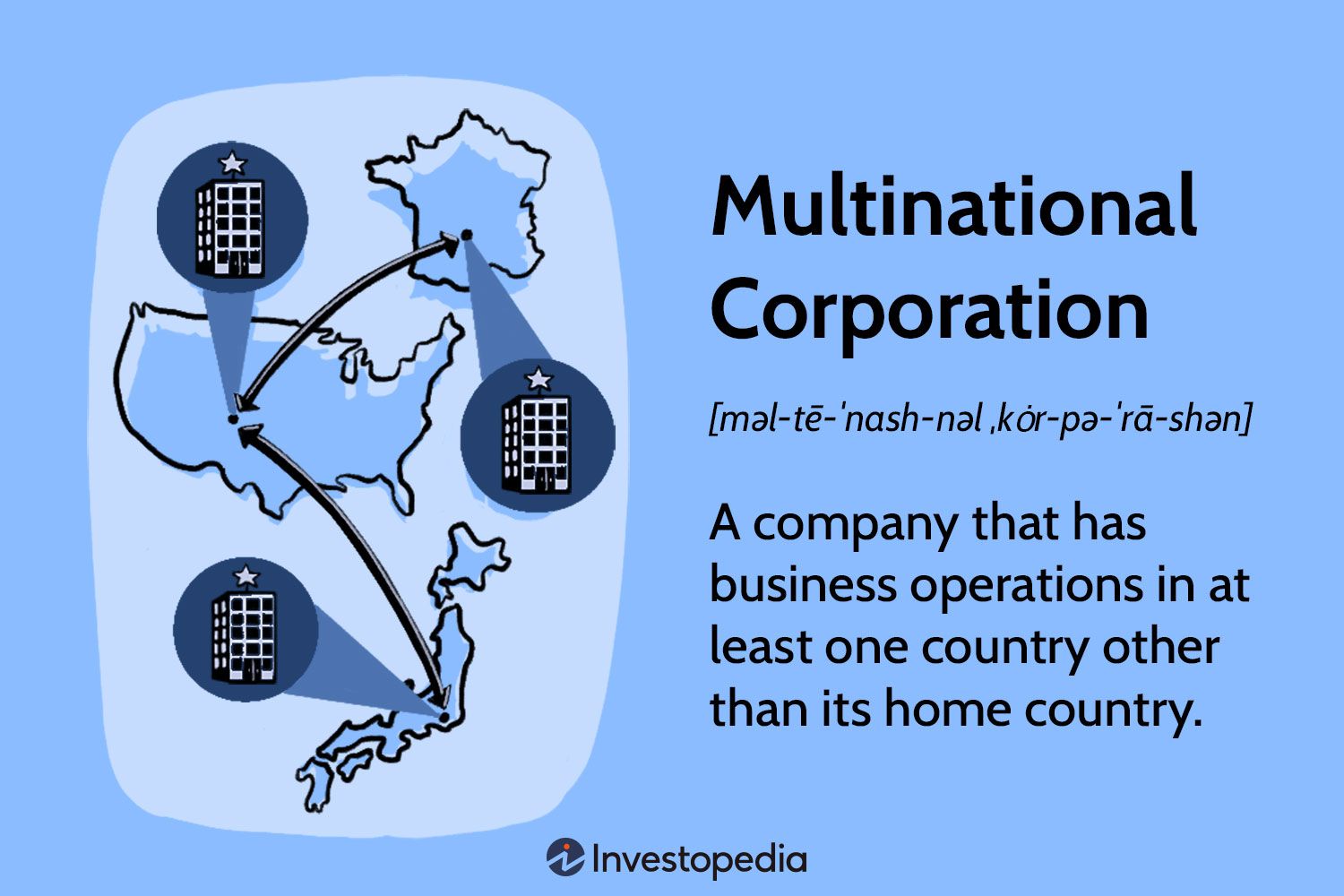
What is an MNC? MNC Full form
A Multinational Corporation (MNC) is a business entity that manages production or delivers services in more than one country. Unlike domestic companies that solely serve their home market, MNCs maintain global business operations, strategically navigating various regulatory environments, cultures, and economic landscapes. The defining characteristics of an MNC include substantial foreign direct investment (FDI), centralized management often located in the home country, and the ability to influence global supply chains. Prominent examples of MNCs include Apple, Coca-Cola, Toyota, Nestlé, and Unilever. These corporations operate on a scale that transcends local markets, often integrating operations such as manufacturing, marketing, research, and development across multiple countries. By leveraging global resources, MNCs aim to achieve efficiency, competitive advantage, and market penetration on a worldwide scale. Historical Evolution of MNCs The concept of multinational corporations is not new. It traces back to early trading companies like the British East India Company and the Dutch East India Company, which established overseas operations to expand trade and influence. However, the modern MNC evolved significantly during the 20th century, particularly after World War II, due to rapid advancements in communication, transportation, and international finance. The post-war era witnessed corporations from the United States, Europe, and Japan expanding abroad, launching subsidiaries, and exploring international markets to access raw materials, labor, and new customers. Today, MNCs have evolved into highly sophisticated entities with global brands, interconnected supply chains, and extensive digital operations. They not only drive business innovation but also shape global economic policies and cross-border trade agreements. Key Features of MNCs Advantages of MNCs Multinational corporations offer several benefits both to home and host countries: Challenges Faced by MNCs Despite their advantages, MNCs face a variety of challenges: Impact of MNCs on Globalization Multinational corporations are both drivers and beneficiaries of globalization. By expanding across borders, they facilitate the global flow of capital, resources, knowledge, and people. MNCs often set industry standards, influence international trade policies, and shape regulatory frameworks. For instance, global supply chain management practices pioneered by MNCs are now standard in international logistics and retail. Furthermore, MNCs contribute to the creation of a global consumer culture. Brands like McDonald’s, Google, and Samsung have consumers recognizing and trusting products across continents. This globalization of products, services, and media strengthens interdependence between nations and encourages economic cooperation. Role of MNCs in Emerging Markets Emerging economies often benefit significantly from multinational investment. MNCs bring capital, advanced technology, and managerial expertise to countries seeking industrial development. Nations such as India, China, and Vietnam have leveraged multinational presence to stimulate infrastructure development, enhance employment, and promote exports. In addition, competition with MNCs encourages domestic firms to innovate and increase productivity.…
-

The Genesis of Henof.com Tech
Henof.com Tech was established with a vision to bridge the gap between advanced tech solutions and practical usability. The platform focuses on providing comprehensive tools and services for web development, data management, and digital automation. The company’s mission is to simplify complex technological processes while ensuring scalability, reliability, and high-performance metrics. Foundational Principles The core principles of Henof.com Tech revolve around: Key Technologies Behind Henof.com Tech Henof.com Tech leverages a multi-layered technological stack to deliver seamless services. This range of technologies ensures efficiency, flexibility, and future-readiness. Cloud Computing Integration Henof.com Tech utilizes cloud infrastructure to enhance performance and availability. By leveraging cloud platforms, the system can handle peak loads efficiently while providing a distributed architecture for failover and redundancy. This approach minimizes downtime and ensures uninterrupted service delivery. Artificial Intelligence and Machine Learning Artificial Intelligence (AI) and Machine Learning (ML) are cornerstones of Henof.com Tech’s innovation. AI-driven analytics offer insights into user behavior and automate data classification, while ML models optimize performance by predicting trends, improving content recommendation algorithms, and managing resource allocation dynamically. Cybersecurity Infrastructure Security is integral to Henof.com Tech. The platform incorporates multi-factor authentication, end-to-end encryption, and proactive threat detection. Regular security audits, patch management, and compliance with standards like GDPR enhance user trust and safeguard sensitive information from breaches. API-Based Architecture Henof.com Tech adopts an API-first approach, allowing developers and third-party services to integrate seamlessly with its platform. This approach provides unmatched flexibility, enabling rapid deployment of new features, custom modules, and integration with external SaaS ecosystems. Henof.com Tech Services and Offerings A distinguishing factor of Henof.com Tech is its wide array of services that cater to diverse user needs.…
-

Filmyz8la: Everything You Need to Know
Introduction Filmyz8la is a name that often appears in online searches by people looking for…
-

Master Full-Stack Web Development: The Ultimate Guide to Building with HonoX
The landscape of modern web development shifts rapidly. Developers constantly search for tools that balance…