

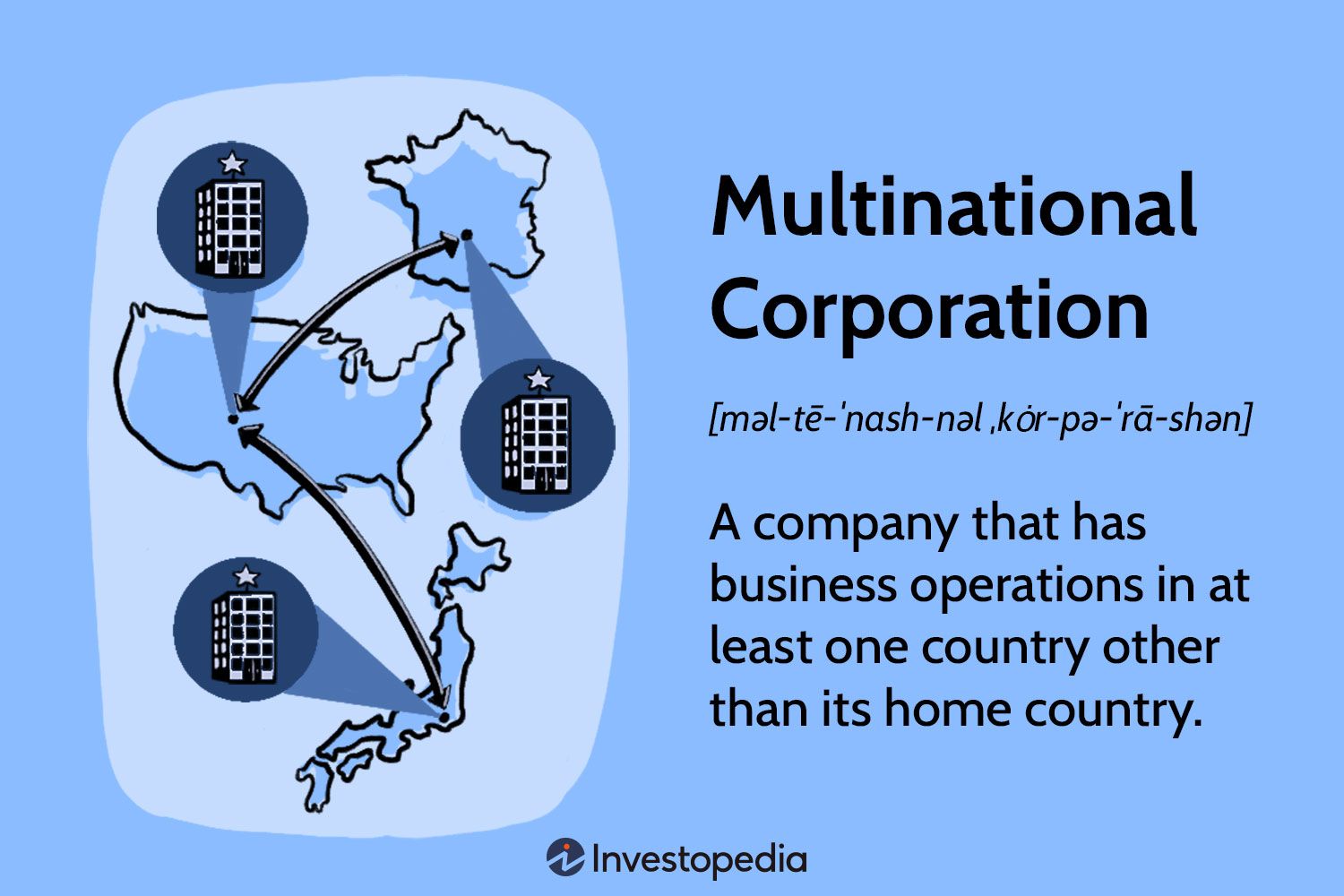
A Multinational Corporation (MNC) is a business entity that manages production or delivers services in more than one country. Unlike domestic companies that solely serve their home market, MNCs maintain global business operations, strategically navigating various regulatory environments, cultures, and economic landscapes. The defining characteristics of an MNC include substantial foreign direct investment (FDI), centralized management often located in the home country, and the ability to influence global supply chains.
Prominent examples of MNCs include Apple, Coca-Cola, Toyota, Nestlé, and Unilever. These corporations operate on a scale that transcends local markets, often integrating operations such as manufacturing, marketing, research, and development across multiple countries. By leveraging global resources, MNCs aim to achieve efficiency, competitive advantage, and market penetration on a worldwide scale.
Historical Evolution of MNCs
The concept of multinational corporations is not new. It traces back to early trading companies like the British East India Company and the Dutch East India Company, which established overseas operations to expand trade and influence. However, the modern MNC evolved significantly during the 20th century, particularly after World War II, due to rapid advancements in communication, transportation, and international finance. The post-war era witnessed corporations from the United States, Europe, and Japan expanding abroad, launching subsidiaries, and exploring international markets to access raw materials, labor, and new customers.
Today, MNCs have evolved into highly sophisticated entities with global brands, interconnected supply chains, and extensive digital operations. They not only drive business innovation but also shape global economic policies and cross-border trade agreements.
Key Features of MNCs
- Global Presence: MNCs operate in multiple countries with a network of subsidiaries, branch offices, or affiliates, ensuring a widespread geographical footprint.
- Centralized Management: While operations may be decentralized, strategic decisions such as mergers, acquisitions, and financial planning are often centralized at the corporate headquarters.
- Foreign Direct Investment: MNCs invest heavily in foreign economies, establishing manufacturing plants, service centers, or joint ventures to increase market share.
- Transfer of Technology: These corporations often introduce advanced technology and management practices to host countries, aiding local industrial development.
- Profit Repatriation: Earnings generated by subsidiaries are frequently repatriated to the home country, which directly impacts national revenue flows.
Advantages of MNCs
Multinational corporations offer several benefits both to home and host countries:
- Economic Growth: By investing in foreign markets, MNCs contribute to GDP growth, industrial development, and employment generation.
- Technology and Skill Transfer: MNCs facilitate the transfer of advanced technology and managerial expertise, improving efficiency in host countries.
- Global Market Access: Companies operating in multiple countries can smooth market fluctuations by trading across regions and accessing broader consumer bases.
- Innovation and Competition: The competitive environment created by MNCs encourages innovation, better products, and improved services.
- Cultural Exchange: By operating internationally, MNCs contribute to the exchange of cultural ideas, business ethics, and corporate practices globally.
Challenges Faced by MNCs
Despite their advantages, MNCs face a variety of challenges:
- Regulatory and Legal Hurdles: Different countries have diverse laws regarding taxation, labor, environmental protection, and corporate governance, requiring compliance strategies that are both flexible and rigorous.
- Political Risks: Instability, policy changes, nationalism, or conflicts in host countries can adversely affect operations and investments.
- Ethical and Social Responsibility Issues: Managing labor practices, environmental concerns, and corporate governance while maintaining ethical standards remains crucial to reputation and sustainability.
- Currency Fluctuations and Economic Instability: Exchange rate volatility and differing economic cycles across countries can affect profitability.
- Cultural and Managerial Differences: Successful management requires understanding local cultures, work ethics, and consumer behavior, which may conflict with global corporate strategies.
Impact of MNCs on Globalization
Multinational corporations are both drivers and beneficiaries of globalization. By expanding across borders, they facilitate the global flow of capital, resources, knowledge, and people. MNCs often set industry standards, influence international trade policies, and shape regulatory frameworks. For instance, global supply chain management practices pioneered by MNCs are now standard in international logistics and retail.
Furthermore, MNCs contribute to the creation of a global consumer culture. Brands like McDonald’s, Google, and Samsung have consumers recognizing and trusting products across continents. This globalization of products, services, and media strengthens interdependence between nations and encourages economic cooperation.
Role of MNCs in Emerging Markets
Emerging economies often benefit significantly from multinational investment. MNCs bring capital, advanced technology, and managerial expertise to countries seeking industrial development. Nations such as India, China, and Vietnam have leveraged multinational presence to stimulate infrastructure development, enhance employment, and promote exports. In addition, competition with MNCs encourages domestic firms to innovate and increase productivity.
However, the influence of MNCs must be carefully managed to ensure that national interests, local businesses, and labor rights are not compromised. Policies like tax incentives, regulatory guidelines, and joint ventures aim to balance foreign investment with domestic priorities.
Future of Multinational Corporations
The future of MNCs is likely to be shaped by the digital revolution, sustainability concerns, and geopolitical dynamics. Increasingly, multinational corporations are integrating digital platforms, artificial intelligence, and big data analytics into their decision-making and operations. Environmental responsibility and sustainable practices are becoming non-negotiable as stakeholders demand greener operations and socially responsible behavior.
Geopolitical tensions, trade wars, and regional economic policies may reshape global investment patterns. MNCs must adopt flexible models, diversify risk, and embrace inclusive growth strategies to maintain competitiveness in an increasingly complex and interconnected world. for more click henofx.com
Conclusion
Understanding the MNC full form—Multinational Corporation—provides insight into the entities that dominate the modern business landscape. Their global operations, economic impact, and role in shaping international trade make them integral to both the corporate and policy spheres. While they offer immense benefits, ranging from economic growth to technological advancement, they also pose challenges that require careful management, ethical oversight, and strategic planning.
As globalization continues to evolve, MNCs will remain at the forefront of business innovation, cultural exchange, and economic development, making the study of their operations and influence more relevant than ever.
This detailed exploration of MNCs underscores their complexity, significance, and the multi-dimensional impact they have on our world, highlighting why understanding their mechanics is crucial in today’s global economy.
Leave a Reply